
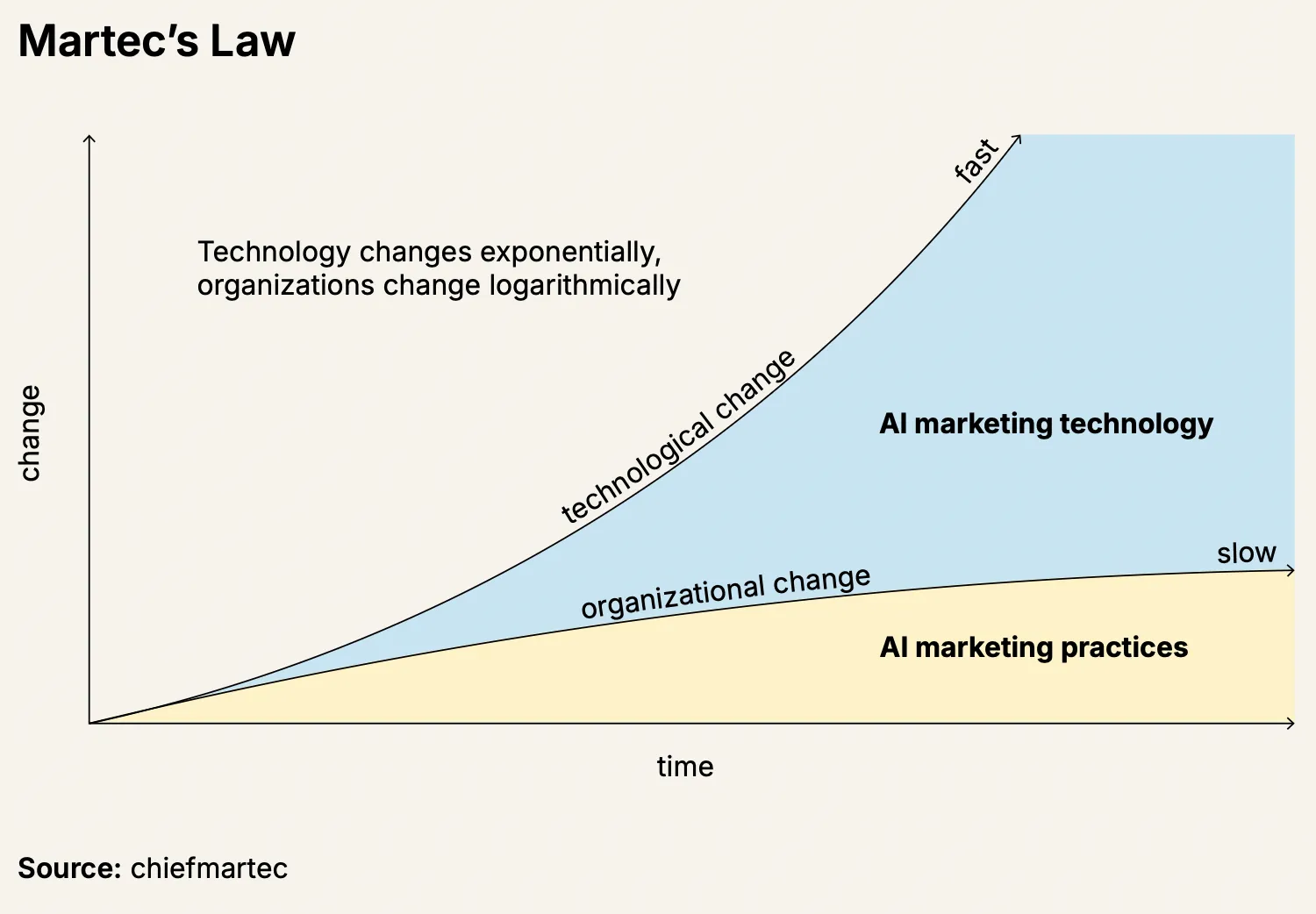
The boardroom question we hear most often isn't "Should we use AI?" anymore. It's "How do we know if we're ready for AI, and where do we even start?". Technology changes exponentially, while changes in organizations require more time and effort.
This uncertainty is paralyzing organizations across industries. Marketing leaders feel the pressure to innovate with GenAI and intelligent automation, but they're rightfully concerned about risk, compliance, costs, and whether their teams have the right skills. Many view their MarTech investments as costly necessities rather than growth engines.
At T1A, we've developed a systematic approach to cut through this confusion.
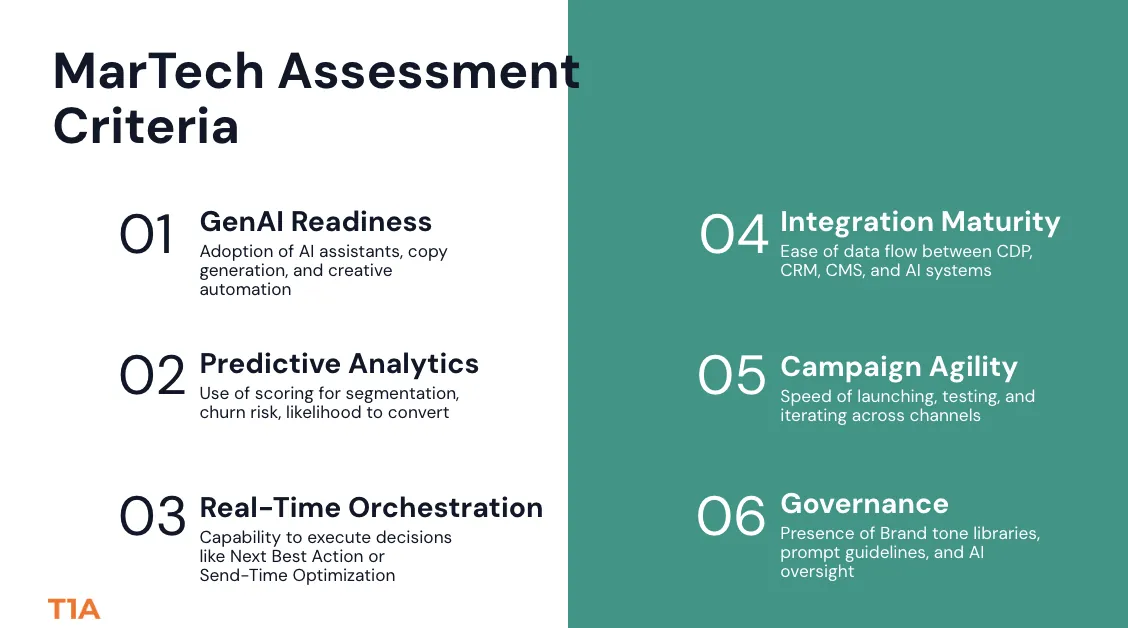
Most organizations rush toward AI implementation without realizing they're missing fundamental building blocks. It's like trying to build a penthouse without checking if the foundation can support it. Our assessment framework evaluates six critical dimensions that determine AI readiness – from basic integration maturity to advanced real-time orchestration capabilities.
The uncomfortable truth? If your marketing tools don't communicate well with each other, if you're dealing with data silos, or if you're still broadcasting the same message to all customers, GenAI won't be your silver bullet. It might not even be feasible.
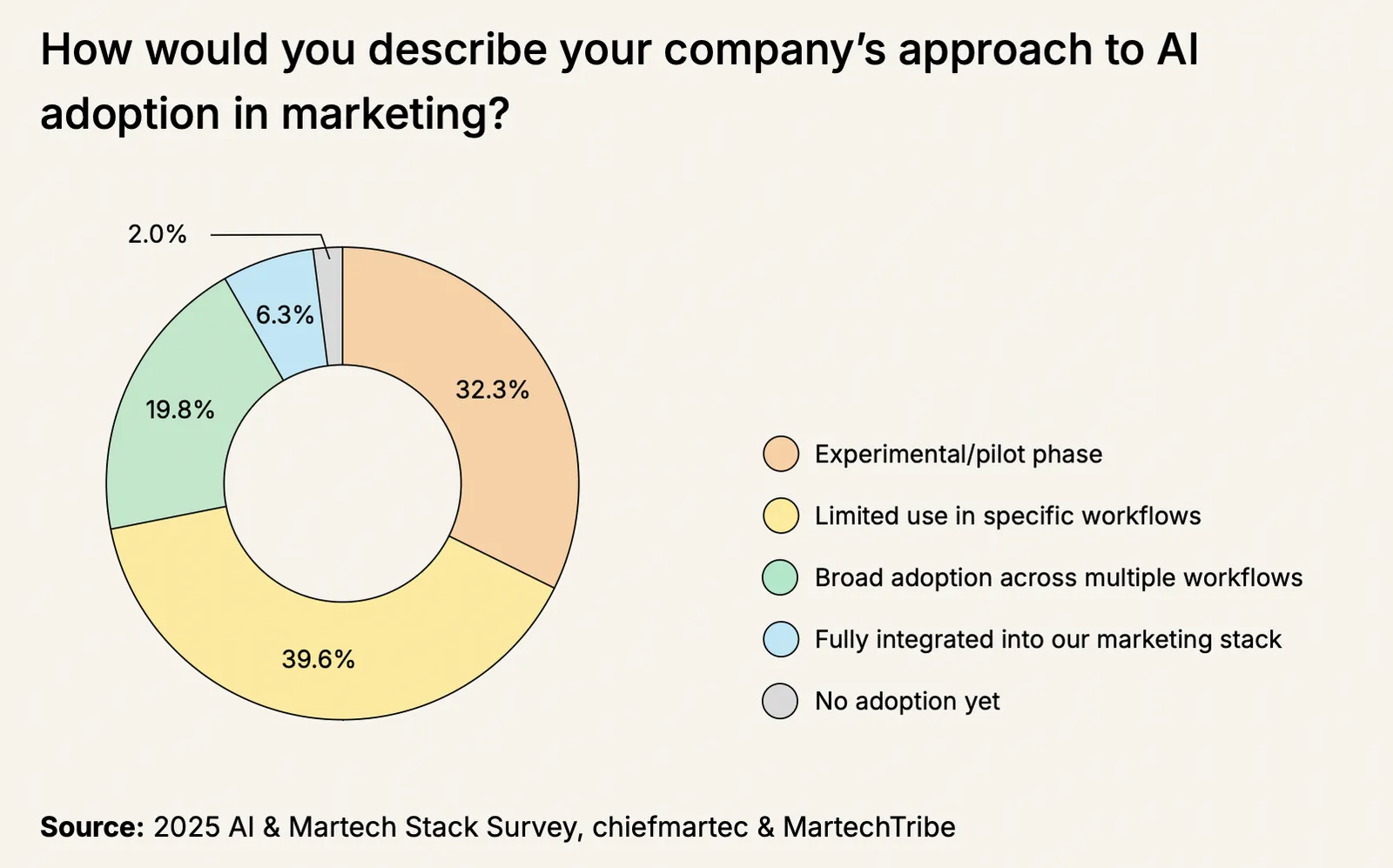
But don't worry, you're not alone on this journey: if you're thinking about it, understand that it's important, and are trying some steps — you're among the many others doing the same.
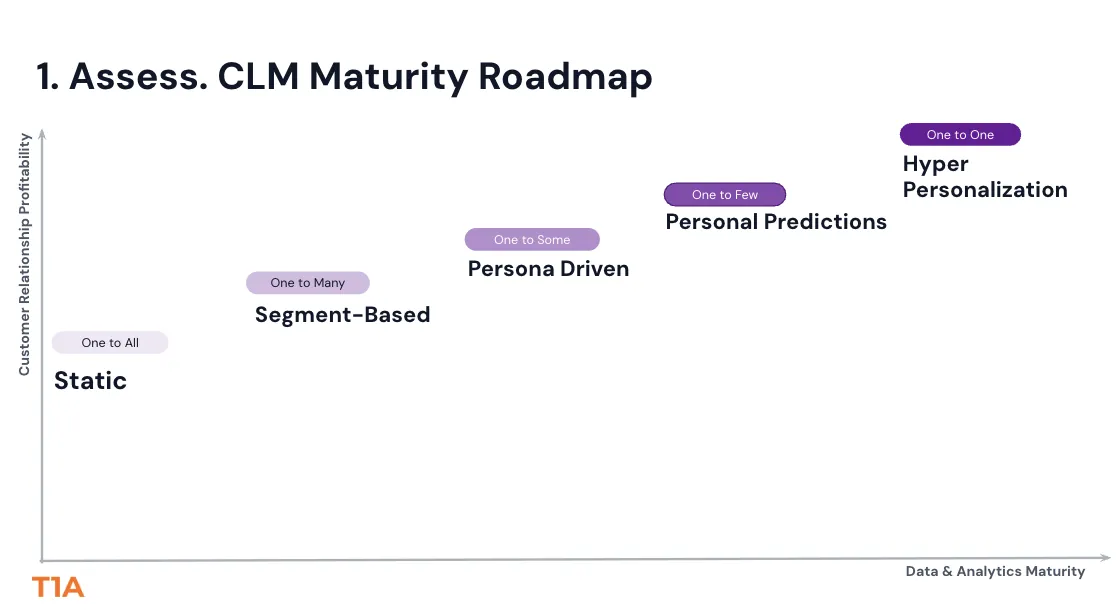
We've mapped the typical evolution path organizations follow. At the foundational "One to All" stage, companies send static messages with no personalization. They're just beginning to collect customer data. At this stage, GenAI and ML simply aren't feasible – there's no data to feed them.
As organizations progress through segment-specific personalization and data-driven decision making, they gradually build the capabilities needed for true one-to-one hyper-personalization. Each stage has its own value, and rushing ahead often leads to expensive failures.
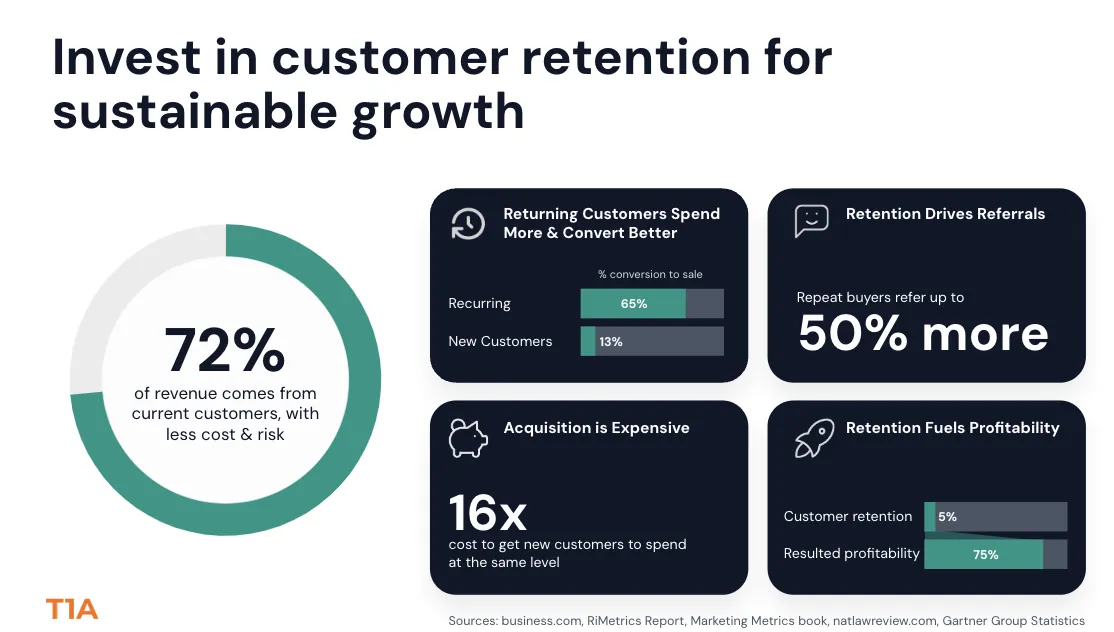
The business case for getting this right is compelling. Consider that returning customers convert at 65% compared to just 13% for new customers. With 72% of revenue typically coming from existing customers, the ability to deliver personalized, AI-powered experiences isn't just nice to have – it's essential for survival.
Yet without the right foundation, even the best AI tools will disappoint.
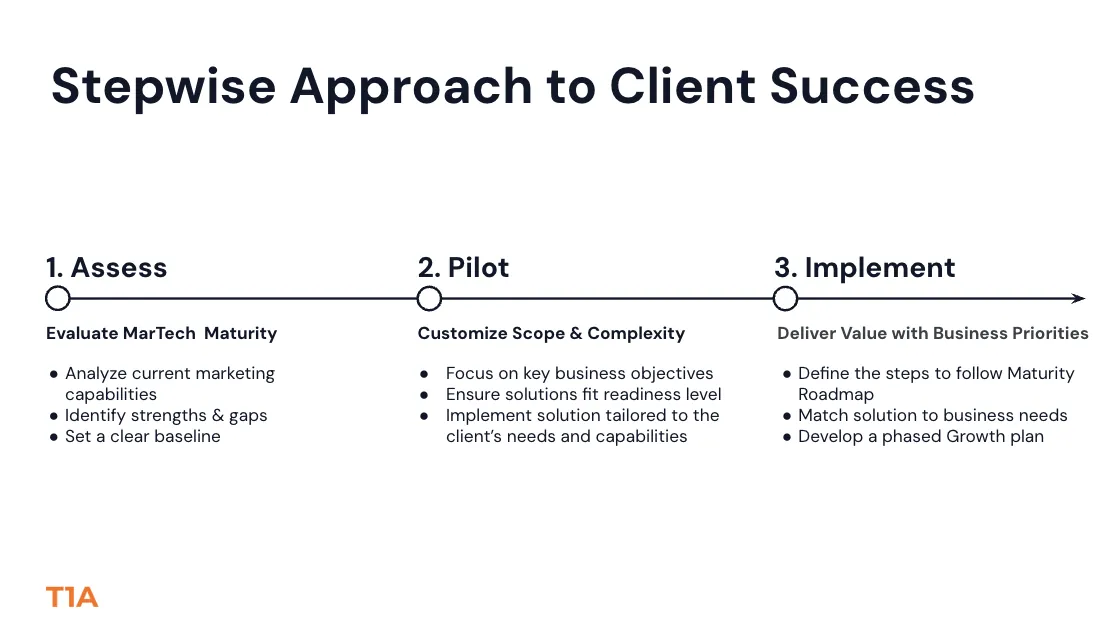
We've learned that successful AI adoption follows a predictable pattern:
Assessment isn't about judging – it's about creating clarity. We analyze your current capabilities, identify gaps, and establish a realistic baseline. No sugar-coating, no overselling.
Piloting proves value – Instead of massive transformations, we design 2-3 targeted campaigns that match your actual readiness level. These pilots demonstrate ROI while building internal confidence.
Implementation respects reality – We deliver solutions tailored to where you are, not where vendors think you should be. The phased growth plan ensures each step builds on the last.
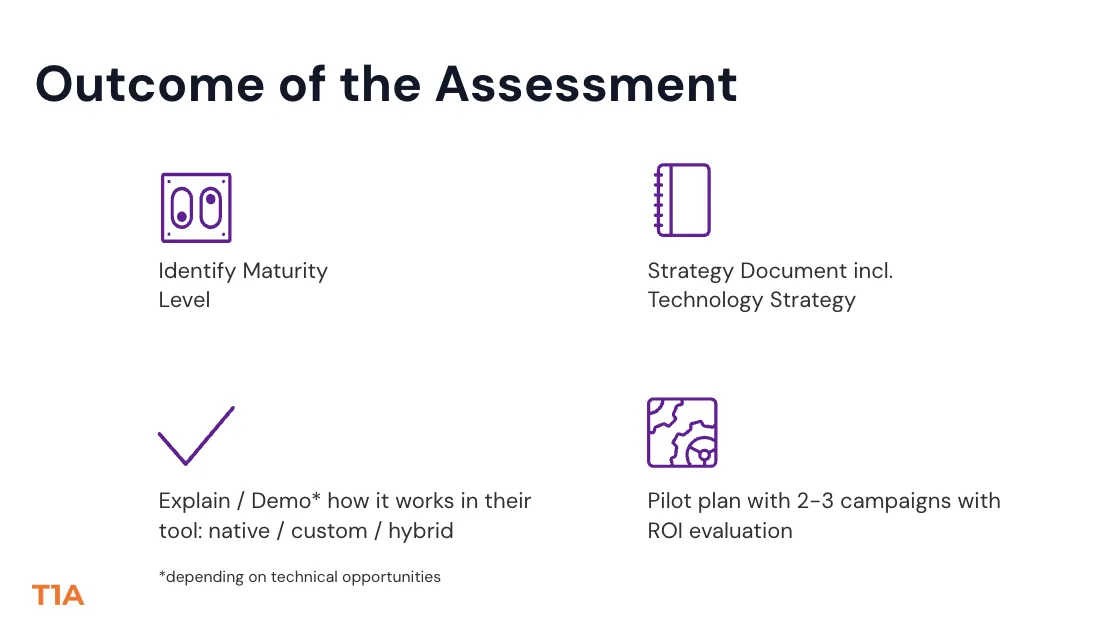
Our clients leave the assessment process with three concrete deliverables:
More importantly, they gain confidence. The path from uncertainty to AI-powered growth becomes visible and achievable.
You don't need to figure this out alone. The gap between AI's promise and practical implementation is real, but it's bridgeable with the right approach. Whether you're just starting to collect customer data or ready for advanced personalization, there's a logical next step.
Ready to move from AI uncertainty to strategic clarity? If you're interested in understanding your organization's true readiness and building a practical path forward, reach out to our team. Let's start with an honest assessment of where you are and map out where you can realistically go.
#MarTech #AIStrategy #DigitalTransformation #MarketingInnovation #CustomerExperience