
Data landscape of one of our clients was built around a legacy on-premises Managed File Transfer (MFT) platform, handling data movement between AWS cloud, on-prem, and external systems. It worked, but it came with a growing list of friction points:
The client reached out to us for ideas for a modernized alternative for the MFT platform, and we got to work.
We didn't jump straight to a solution, but started with evaluating options:
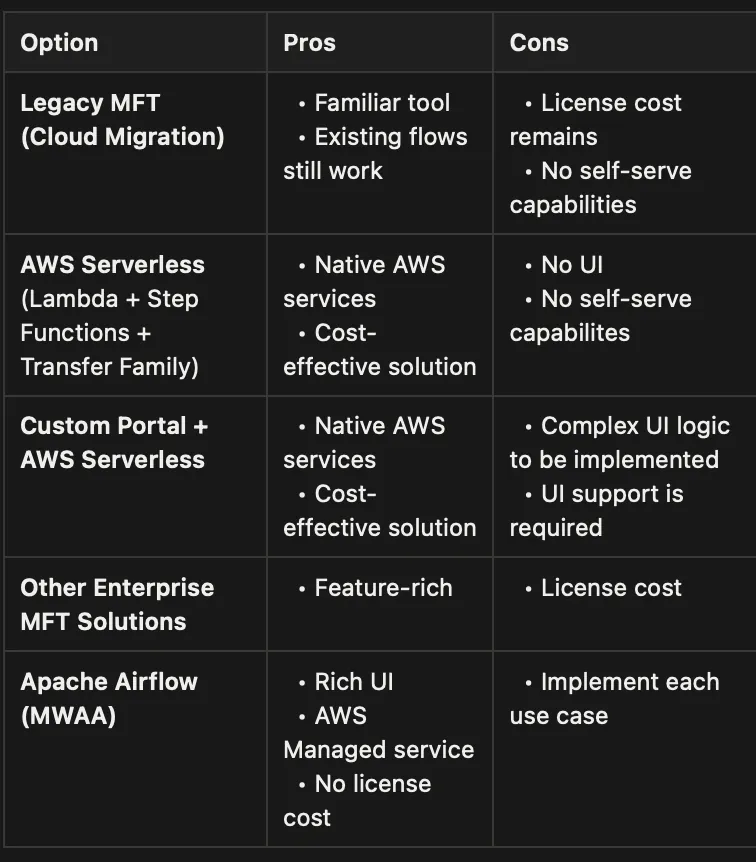
After cairfully evaluating the options, we decided on Airflow - based on combination of cost, developer experience, and managed operations.
Apache Airflow has been around since 2014, born at Airbnb to tame increasingly complex data workflows. It's a mature, battle-hardened, open-source orchestration platform with over a decade of production use across the industry.
So why does it feel like a fresh choice? Because Amazon MWAA has changed the game.
For years, Airflow's main friction was operational: you had to host it, scale it, patch it, and maintain it. That overhead was a real barrier for teams without dedicated platform engineering resources. MWAA removes that barrier entirely, by providing a cloud-native managed version of Airflow**.**
The core concept is the DAG (Directed Acyclic Graph) - a Python-defined workflow that specifies:
DAGs live in S3, are parsed on startup, and refresh periodically. The entire pipeline logic is code - versionable, reviewable, testable. No proprietary GUI scripting. No vendor lock-in on the logic layer.
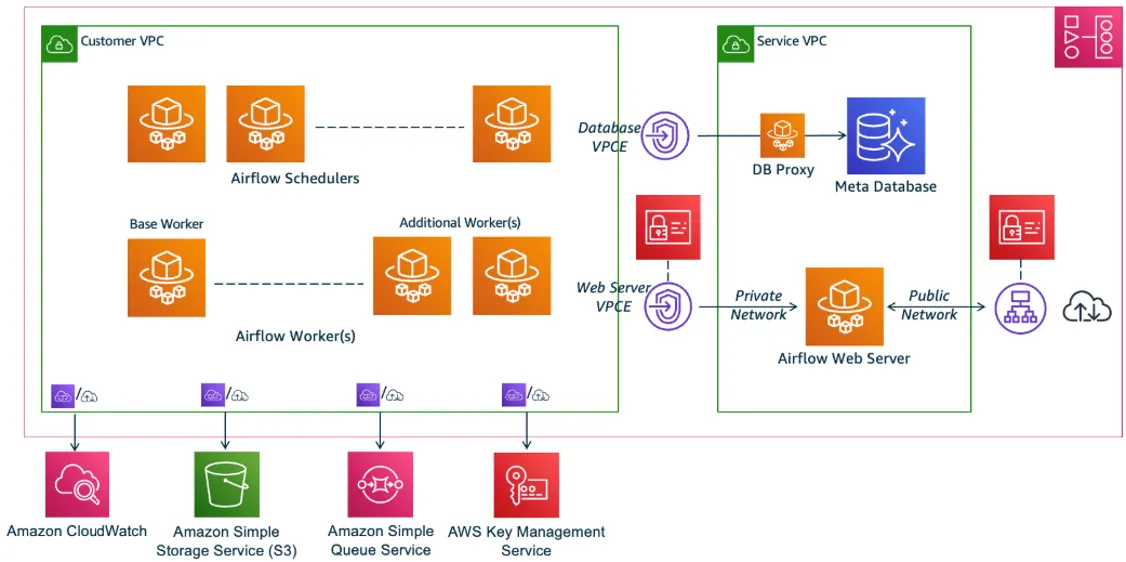
MWAA is what takes a great-but-operationally-heavy tool and makes it viable for modern cloud teams. Under the hood, the architecture is fully AWS-managed. The core components are:
As a result, MWAA provides enterprise-grade infrastructure with none of the operational burden.
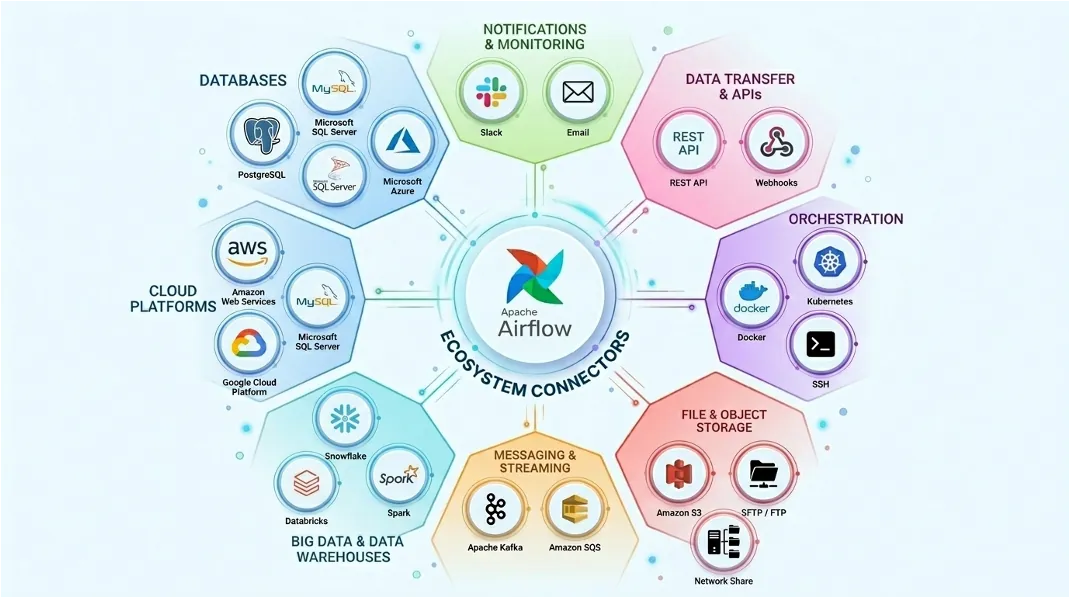
One of Airflow's most underappreciated strengths is its Provider ecosystem. Providers are installable packages that ship with pre-built Operators, Hooks, and Sensors - meaning the integration code you'd normally have to write from scratch is already done.
Out of the box (or with a single line in requirements.txt), you get connectors for:
For example, a typical file transfer task in Airflow looks something like this:
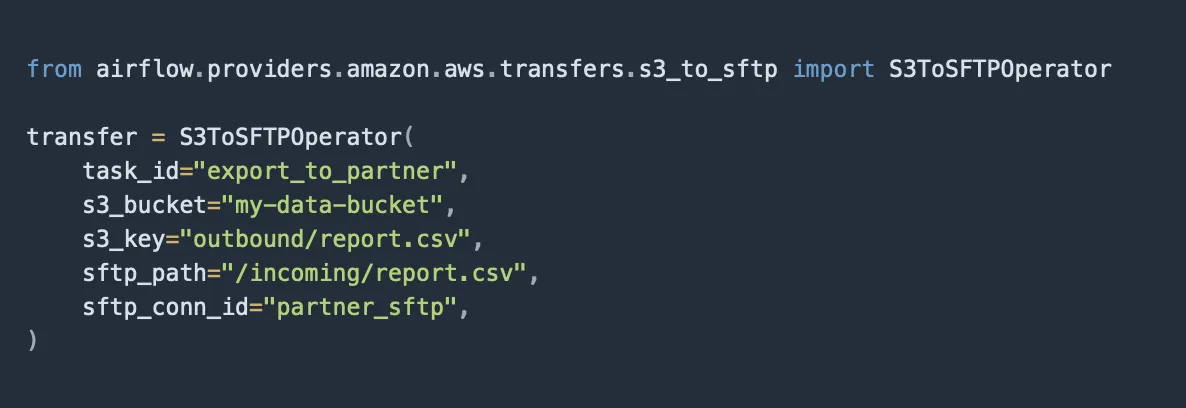
No custom SSH handling, no manual boto3 session management - the heavy lifting is pre-implemented. You configure the connection credentials once in the Airflow UI (or Secrets Manager), and reuse it across every DAG.
This was a decisive factor for us: we weren't building integration code, we were assembling proven building blocks.
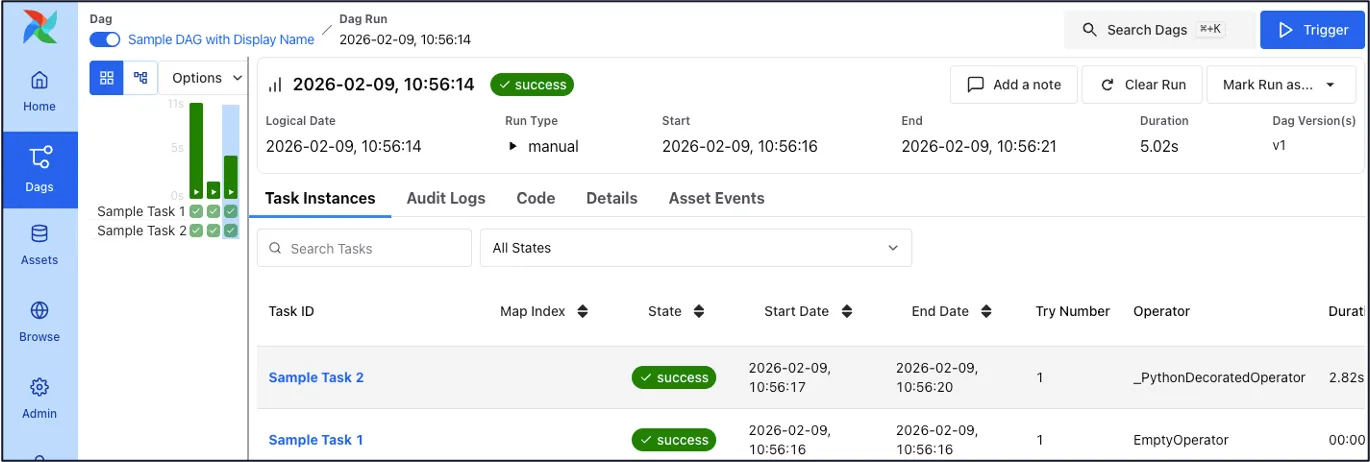
One underrated aspect of Airflow is the UI. For a file-transfer replacement use case, visibility matters. With Airflow's UI, our team can:
Having a feature-rich UI isn’t just a win for engineers, it was also a win for operators and support teams who needed visibility without touching code.
Here's the honest part that most tech articles skip: the build is the easy part now. The actual effort looked like this:
Resource Provisioning → Tech Build → Operationalization
"Operationalization" meant: demos, architecture approvals, security reviews, production support sign-offs, responsibility matrices, data privacy impact assessments and many other hurdles.
The engineering effort was a fraction of the total delivery timeline. If you're planning a similar migration, budget time for the organizational effort - it's where projects actually slow down.