
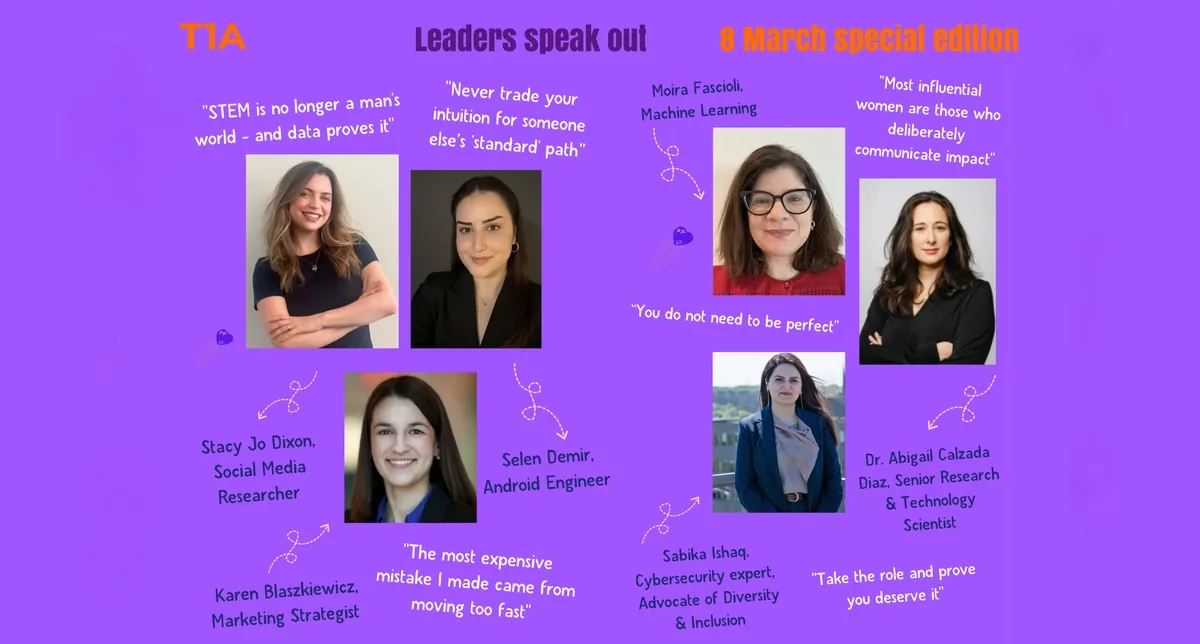
Across industries as different as cybersecurity, space research, AI engineering, analytics and marketing, interviews with these six women professionals reveal a striking common thread. None of them talk about careers as linear trajectories or leadership as a title.
Instead, Abigail Calzada Diaz, Senior R&T Scientist (European Space Resources Innovation (ESRIC), Moyra Fascioli, IT Marketing Analytics Manager (Valentino), Stacy Jo Dixon, Industry Expert (Statista), Selen Demir, Founder at Zentra, Karen Blaszkiewicz, Associate Director of Marketing Automation at Nonprofit, Senior Android Engineer at Android Engineers, Sabika Ishaq, CISO & Head of Information Security at Grant Thornton Luxembourg, speak about courage before confidence, visibility alongside competence and the responsibility that comes with building technologies that increasingly shape how societies make decisions.
Their reflections move beyond the usual narratives about women in tech. They speak about something more structural: how influence is built, where bias still hides, why ethical design matters and why some of the most critical leadership skills like trust, psychological safety and long-term thinking are still rarely measured.
If we could advise one long read for this weekend, it would be our latest T1A article from the ‘Leaders Speak Out’ project - a special 8 March edition, where six brilliant minds share the lessons they rarely hear said out loud, the risks that paid off and the responsibilities that come with building the systems of tomorrow.
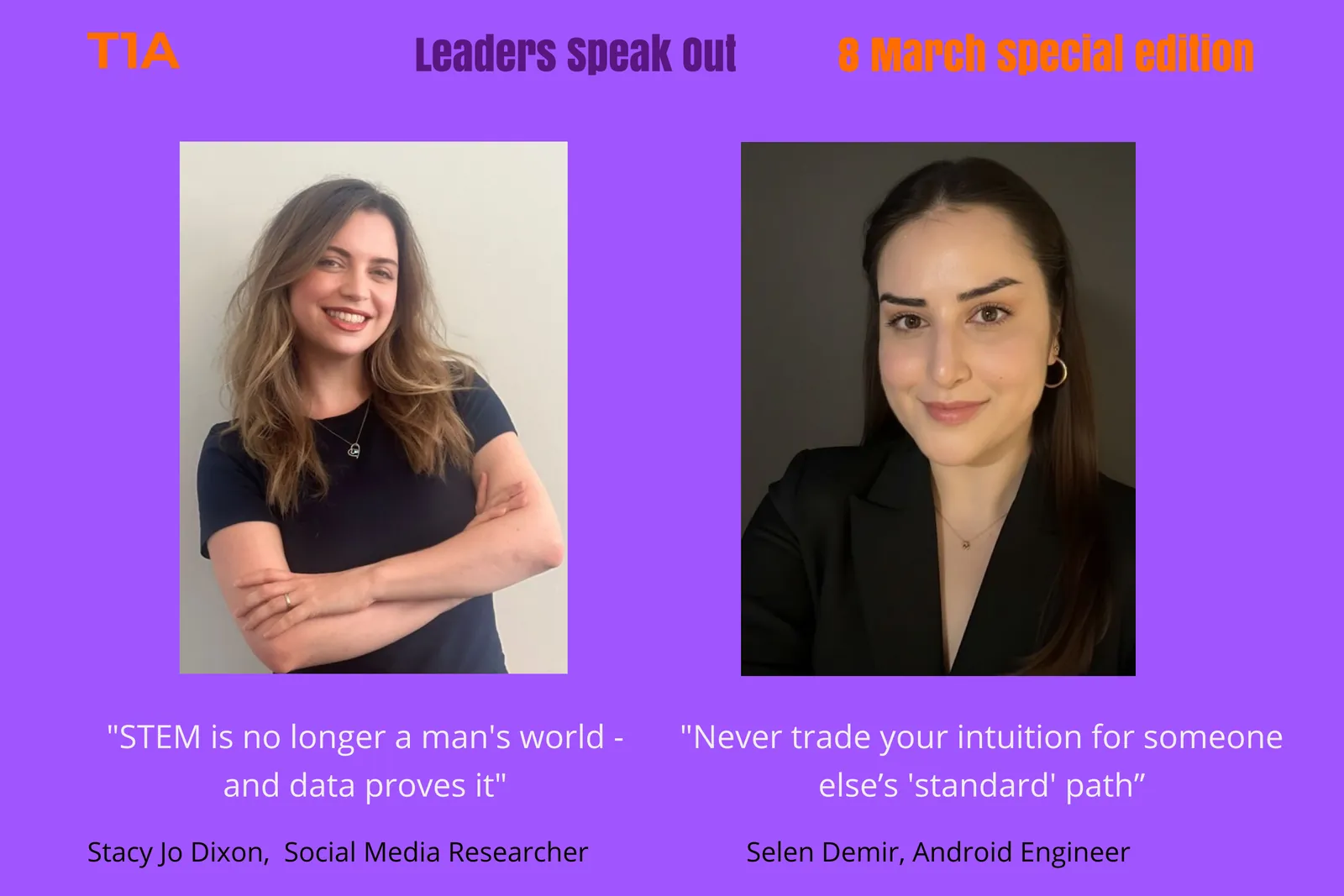
Selen Demir: Your voice is the primary authority on your work. We are often conditioned to wait for external validation or 'permission' to lead. The truth is: you don't need to be 100% perfect to be 100% ready. Perfectionism is often a cage; 'done' and 'impactful' are far more powerful than 'perfect'.
Karen Blaszkiewicz: Career paths rarely follow a linear path. Say ‘yes’ to any opportunity that interests you. You never know where it is going to take you. You will always gain skills and connections through those opportunities even if it is not directly related to the work that you do. You can pull from those experiences later.
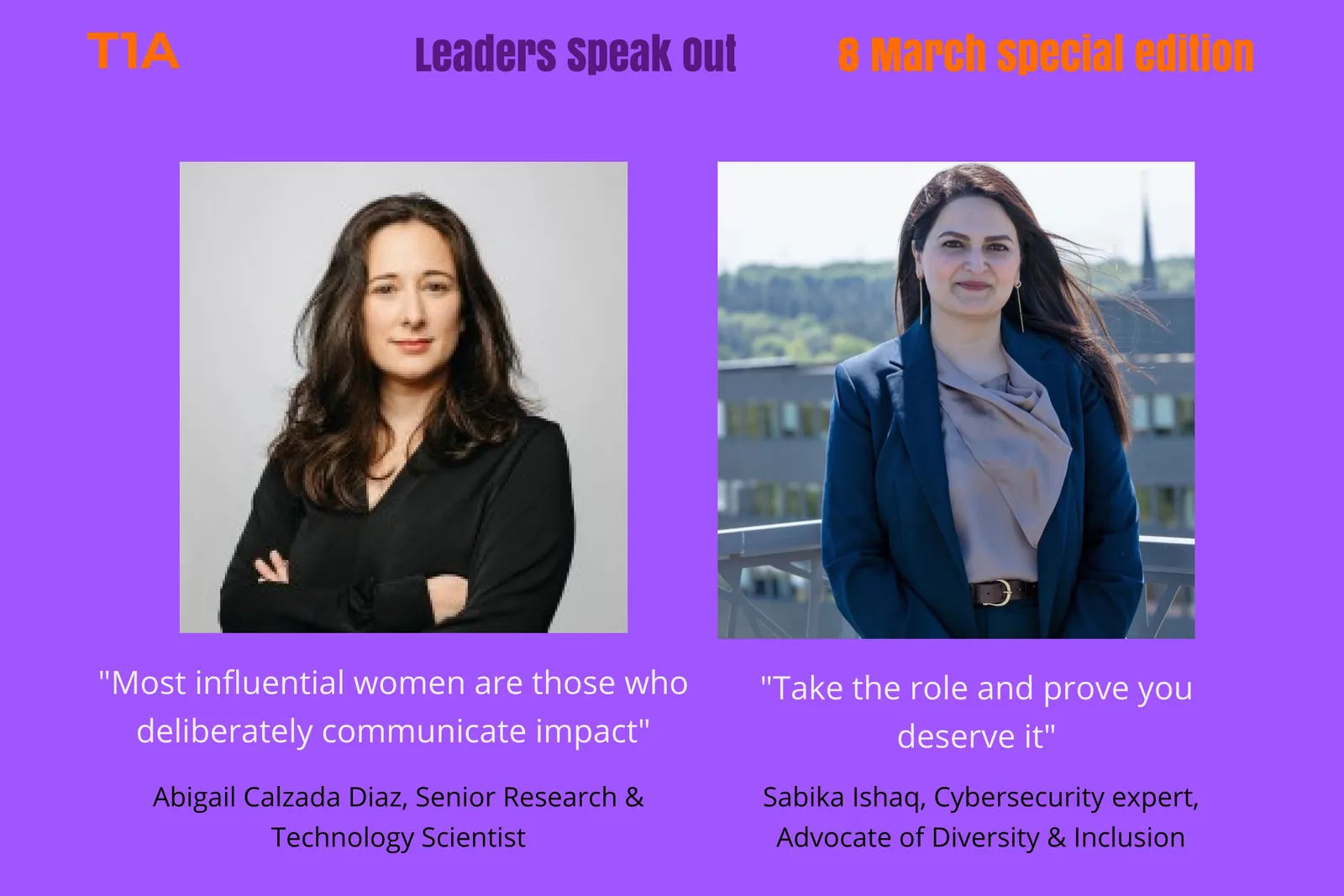
Sabika Ishaq: When a female colleague came to me and said she thought she was being offered a leadership role only because she was a woman,I told her: take the role and prove you deserve it, because you probably do. Sometimes the opportunity comes before the confidence, and that’s okay, but sometimes it needs to be said out loud.
Stacy Jo Dixon: We need to trust that our lived experience matters. In tech, especially, if something feels problematic, it probably is. My advice is to trust your gut. It’s not just a feeling, it can be the result of subconscious pattern recognition. Voice it, then look for the numbers to back it up, because you may find that the data is there, and that other women will agree.
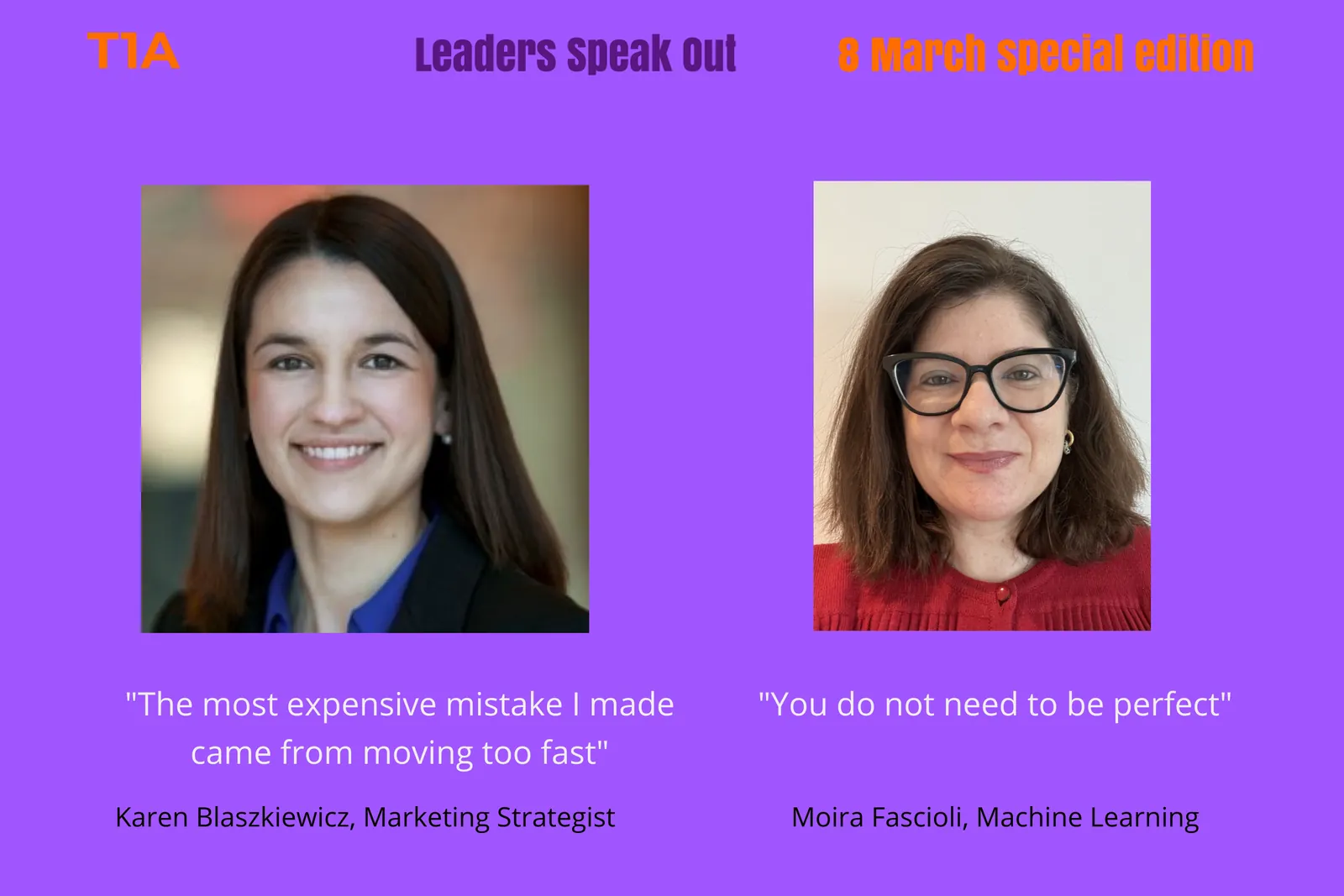
Moyra Fascioli: You don’t need to be perfect. Just like in sewing, mastery doesn’t come from flawless stitches, but from the courage to try, undo, adjust, and keep going. Competence is built in the process.
Abigail Calzada Diaz: Visibility, narrative control, and strategic positioning matter just as much as expertise. Many women are trained to deliver excellent work, assuming they will be recognized for it. In reality, the most influential women are those who deliberately communicate impact, claim ownership of results, and shape the conversation around their work. If you can’t see it, you can’t be it.
Sabika Ishaq: Early in my career, I tried to solve too many problems myself instead of delegating, because as a woman I constantly felt the need to do more to prove my worth. This was at the cost of my well-being. But being in a supportive team taught me that trust in others can create far greater impact than individual effort. However, not everyone is privileged to experience team support, and that is what scares me for future generations in this cut-throat corporate environment.
Selen Demir: The most expensive mistake was letting other people’s limited imaginations set the boundaries for my own potential. It cost me time and energy. It taught me that if you have a vision, you are its primary guardian. Never trade your intuition for someone else’s 'standard' path.
Karen Blaszkiewicz: Mistakes are tough, I always want to put my best self forward. The most expensive mistake I made came from moving too fast. I did not say ‘no’ to enough requests, which caused a long list of deliverables and missed an important step in QA. I learned both to slow down, say no during high deliverable times, and to have compassion for myself. It translated into an important lesson I frequently call on as a manager – when mistakes happen, it is rarely due to malicious intent. I need to dig deeper into the knowledge gap or bandwidth to help support my teams better. Because that same grace was extended to me by managers.
Abigail Calzada Diaz: For a long time I thought my most expensive mistake was stepping away from my studies for a period to pursue personal goals. From a normal perspective it looked inefficient because it delayed my academic timeline in almost 5 years. But I no longer see it as a mistake because during that time I learnt English and developed a level of independence and resilience that formal education does not teach. Thus, what it taught me is that careers are rarely linear. What initially appears as a detour can become a strategic asset later. The key lesson was not to measure progress only by speed, but by the capabilities and perspective you gain along your path.
Moyra Fascioli: My most expensive mistake was focusing on making analytics ‘beautiful’ instead of making them useful. It was like creating a perfectly crafted garment that no one could actually wear. It taught me that real value comes when data fits real decisions.
Sabika Ishaq: Advocating for strategic cybersecurity investments at the Board level before they were widely understood as business priorities. It helped position security not just as protection, but as a driver of trust and resilience.
Selen Demir: Betting on my own projects and ideas even when the roadmap wasn’t fully clear. Stealing away from the 'safe harbor' of traditional roles to build something from the ground up gave me a level of professional freedom and purpose that no corporate title ever could.
Karen Blaszkiewicz: Going back and getting my MBA. I was an elementary school teacher by training and I took a risk 7 years into teaching to leave the profession and learn more about business. I had no idea how I would use that knowledge and said ‘yes’ to any opportunity to gain the technical skills and relationships to grow. It is wild to me because my undergraduate studies were in history and I use many of those research skills in my problem solving in tech. The key is to find transferable skills and build upon them and get curious.
Abigail Calzada Diaz: Choosing to work on problems before the ecosystem was ready for them, as space resources exploration. This often means work with incomplete data, undefined methodologies and scepticism from the established fields. The payoff is that early movers shape the language, the workflows, and the decision frameworks that the field later adopts.
Moyra Fascioli: The risk that paid off was choosing to slow down and add structure when everyone wanted speed. In analytics and AI, governance and clarity are like reinforced seams: invisible at first, but essential to make sure everything holds when it matters.
Selen Demir: Responsibility isn't just in the code; it’s in the data and the ethics behind it. AI acts as a mirror to humanity. If we don't actively work to scrub the bias from that mirror, we risk automating the mistakes of our past. Our duty is to ensure AI is not just 'smart,' but fundamentally fair and human-centric.
Stacy Jo Dixon: Responsibility is to ensure we aren't just building tools for ourselves, but for the people who actually use them. Real inclusion is a quality control measure. We often assume the 'expert' user is in the West, but the data shows that emerging economies are significantly ahead in AI knowledge (64% vs 46% in advanced economies). AI training, knowledge and efficacy 2025| Statista If we build AI without diverse, global input, we are designing for the minority. We risk creating tools that are 'accessible' but fundamentally disconnected from the majority.
Abigail Calzada Diaz: I don’t develop AI systems myself, but I collaborate closely with teams that do, particularly where AI intersects with space and space resources exploration. In that context, one responsibility becomes very clear: AI systems are not neutral tools, they amplify decisions. This means ensuring transparency in the assumptions embedded in the models, traceability of the data sources, and clear boundaries around what the system can and cannot do. Domain experts also need to remain in the loop so that automated outputs are interpreted correctly.
Moyra Fascioli: The responsibility is knowing that small design choices can scale into real impact on people’s lives and taking the time to question fairness, context and consequences before moving forward.
Karen Blaszkiewicz: Bias is important to identify and mitigate in AI systems, and human oversight needs to be added either as a QA step or as a reviewer in all outputs. This helps to refine the output for future iterations.
Sabika Ishaq: Ensuring they are ethical, transparent, and secure because the systems we build today will influence decisions, opportunities and trust for years to come.
Selen Demir: It’s often hidden in the 'soft' expectations. Women are still frequently expected to balance their technical expertise with an extra layer of social performance. A man is often seen as a leader for being assertive, while a woman in the same position is still navigating the hidden bias of being 'likable' versus being 'capable'.
Karen Blaszkiewicz: Bias is hidden in AI by the information it ingests. There is so much generative AIi content available now that the models are ingesting AI content from other models. If there is no oversight into the information fed into the models or guardrails set-up to sort through the bad data, the results and bias will compound.
Stacy Jo Dixon: Bias hides in the belief that women aren't 'meant' to lead in tech. But the numbers say otherwise. Women now make up 52% of the STEM workforce in the US and 57% in Mongolia, which is well above the global average of 40%. Women in STEM by country 2023| Statista The talent is there. The bias in the perception that this is still a 'man's world' when the data proves it isn't.
Moyra Fascioli: Bias is often hidden in the measuring tape, not in the fabric. It lives in the questions we ask, in how we define success, and in what we choose to optimize. If the measurements are off, even the best technology will produce a poor fit.
Sabika Ishaq: In the data we train systems on and in the assumptions embedded in decision-making processes that quietly carry historical biases forward.
Abigail Calzada Diaz: I think today bias is rarely explicit but it tends to appear in more subtle ways. One place it remains hidden is in how competence and leadership potential are evaluated. The same behaviours can be interpreted differently depending on who displays them. Something that in a man is an asset, in a woman could be consider problematic. Another area is visibility. Many women are doing technically complex or strategic work, but they are less often positioned as the visible expert or spokesperson for that work. Since visibility strongly influences career opportunities, this creates a structural disadvantage. So the bias is not necessary in the policies but more often it is embedded in everyday perceptions about authority, credibility, and leadership style.
Selen Demir: Ethical AI governance and User Experience (UX) design. Women often bring a holistic sense of empathy and long-term impact to the table. We need more female influence in deciding not just how we build technology, but why we are building it and who it might inadvertently exclude.
Moyra Fascioli: The phase that needs more female influence is where priorities are set: deciding what to build, for whom, and at what cost. That’s the cutting table. Once those choices are made, execution can only follow the original shape.
Karen Blaszkiewicz: There needs to be a greater representation of females in leadership. Women can have vastly different experiences from men. They may have children they care for at home or a household to run or a side hustle. These personal experiences help shape who they are and women call upon these experiences in tech to shape decisions for organizations, from prioritization to vision.
Stacy Jo Dixon: All of it. We can't just limit 'female influence' to HR or design, it needs to be in the code and the strategy. Look at the gap in AI efficacy, emerging markets report 74% efficacy compared to just 51% in advanced economies. AI training, knowledge and efficacy 2025| Statista That suggests we need different perspectives to understand why tools work better in some places than others. If everyone on the team thinks the same way, or has the same background, you miss the bigger picture.
Abigail Calzada Diaz: I believe technology needs more female influence in all the phases. Diverse perspectives improve the quality of decisions at every stage. However, female influence could be key in 2 phases. The first being where strategic decisions are made. For example when teams decide what problems are worth solving and how solutions should be designed. Those choices shape the direction of the entire development process. The second is the evaluation and deployment phase, where real-world impact is assessed and unintended consequences can be identified. Increasing female influence in those decision points would broaden perspectives and lead to technologies that are more thoughtful, inclusive, and better aligned to real societal needs.
Sabika Ishaq: AI governance, risk management, and product design as these are the areas where diverse perspectives are critical to building technology that works fairly for everyone.
Selen Demir: Creating psychological safety within teams. Success is usually measured by KPIs, but the ability to foster an environment where people feel safe to fail, innovate, and speak up is a superpower. Women leaders excel at building ecosystems of trust rather than just hierarchies of command.
Karen Blaszkiewicz: Women are excellent mentors and sponsors. They know how hard it is to work up to a leadership position. They create spaces for discussion and offer their time to mentor younger women to help pull them up into leadership circles. It offers women support in a field that has little representation.
Moyra Fascioli: Many women lead the way you baste a garment together, quietly holding things in place until they are strong enough to stand on their own. Creating context, managing tension, making space for others. It’s essential work, but it’s rarely counted.
Stacy Jo Dixon: Women often excel at risk mitigation through empathy and the ability to see the entire landscape. These skills make them exceptionally suited for high-stakes fields like Cybersecurity. We rarely have a KPI for 'crises prevented,' but the ability to read a room or predict human behaviour is critical right now. Companies measure quarterly revenue, but they rarely measure the cohesive culture that keeps retention high and threats low, which is an area where female leaders often instinctively shine.
Abigail Calzada Diaz: One thing women often do very well in leadership is building strong, functional teams. Creating an environment where people communicate openly, trust each other, and feel responsible for the collective outcome takes time and effort, but it makes organizations much more resilient. The issue I see is that this kind of work is rarely measured. Most performance metrics focus on individual results or short-term outputs, while the work of maintaining collaboration, trust and team cohesion tends to remain invisible, even though it is often what makes complex projects actually succeed.
Sabika Ishaq: Creating trust, collaboration and most importantly psychological safety - conditions that allow teams to innovate, perform and grow sustainably.