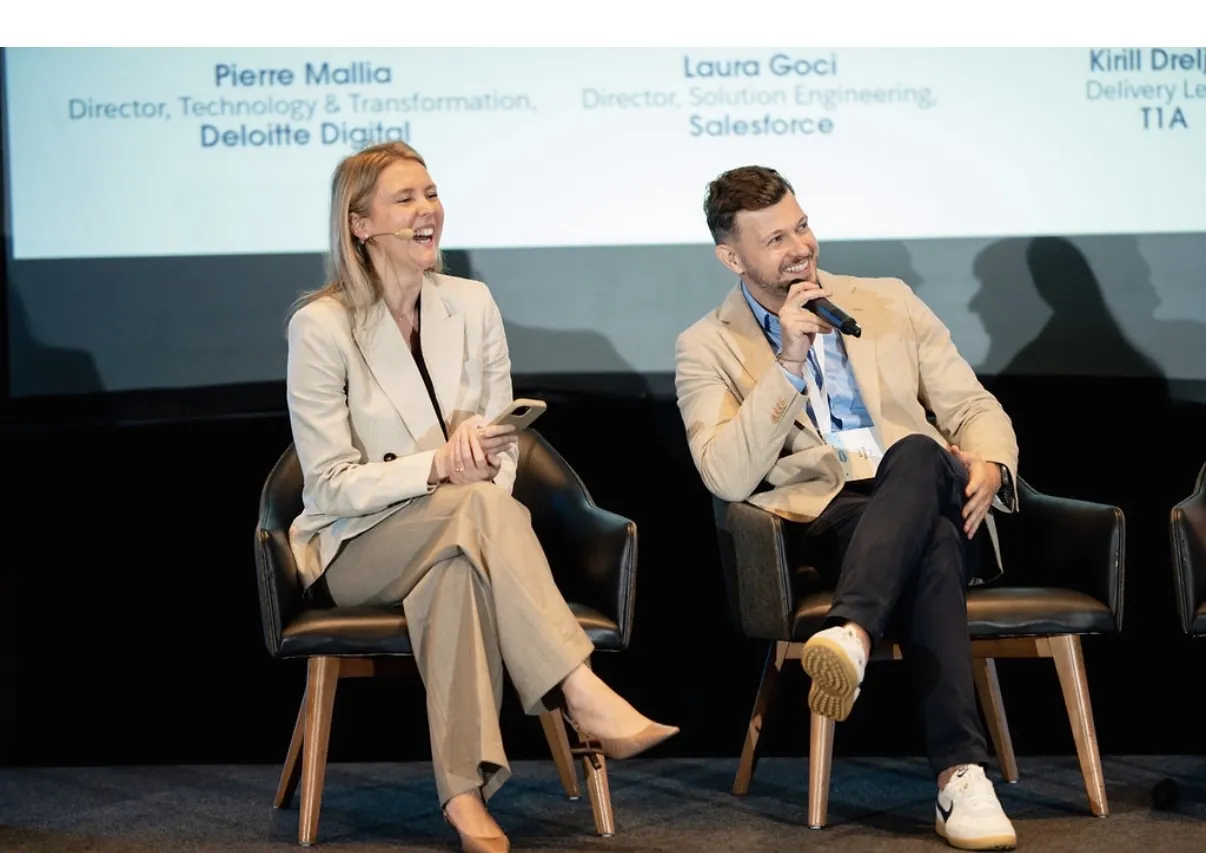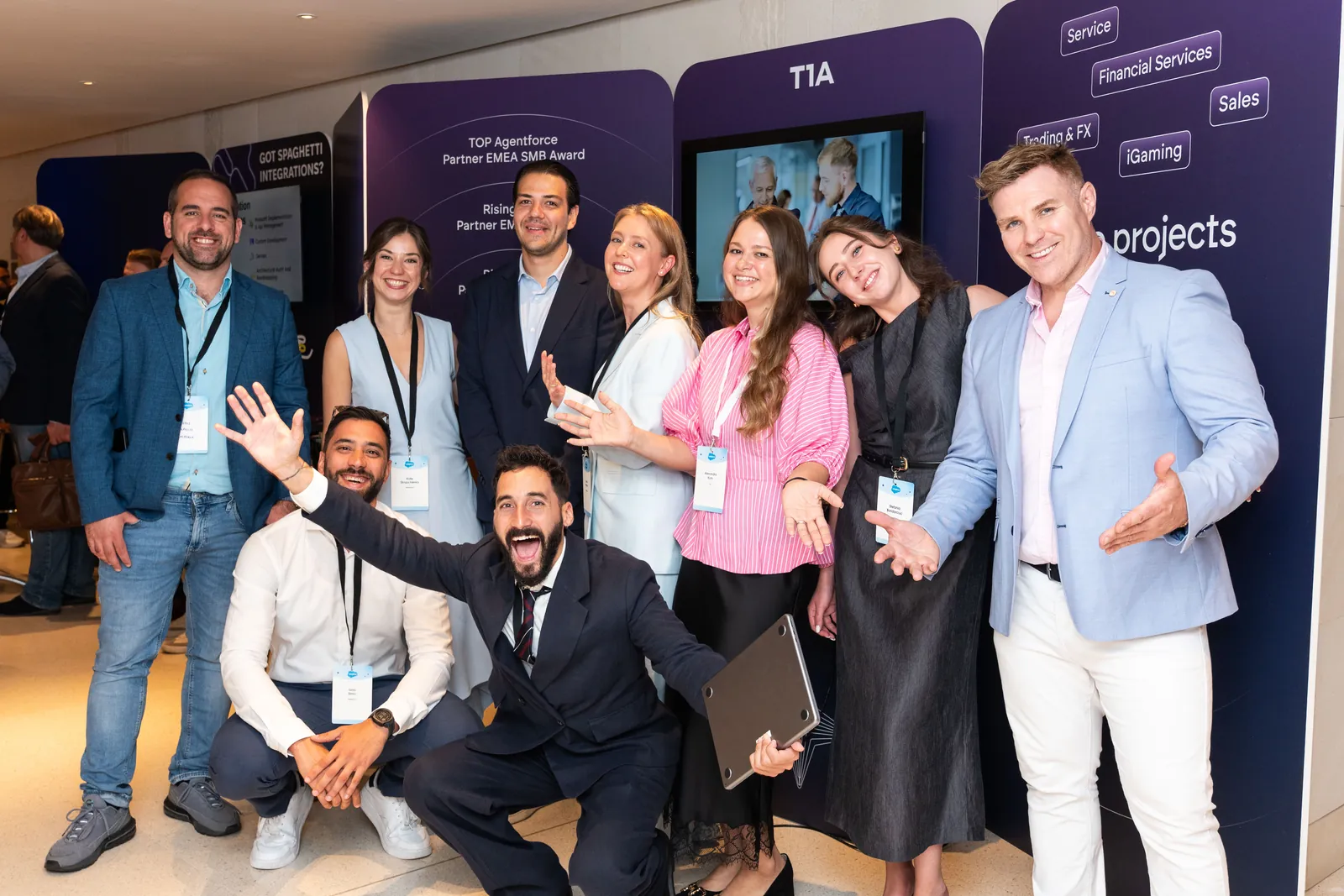

This year two of our T1A experts were on stage at Global Tech Weekend Tbilisi. During the discussions they challenged a few assumptions that still dominate boardrooms. Despite all the conversation about intelligent agents, copilots and genAI, many organizations are still trying to solve tomorrow’s problems with yesterday’s foundations.
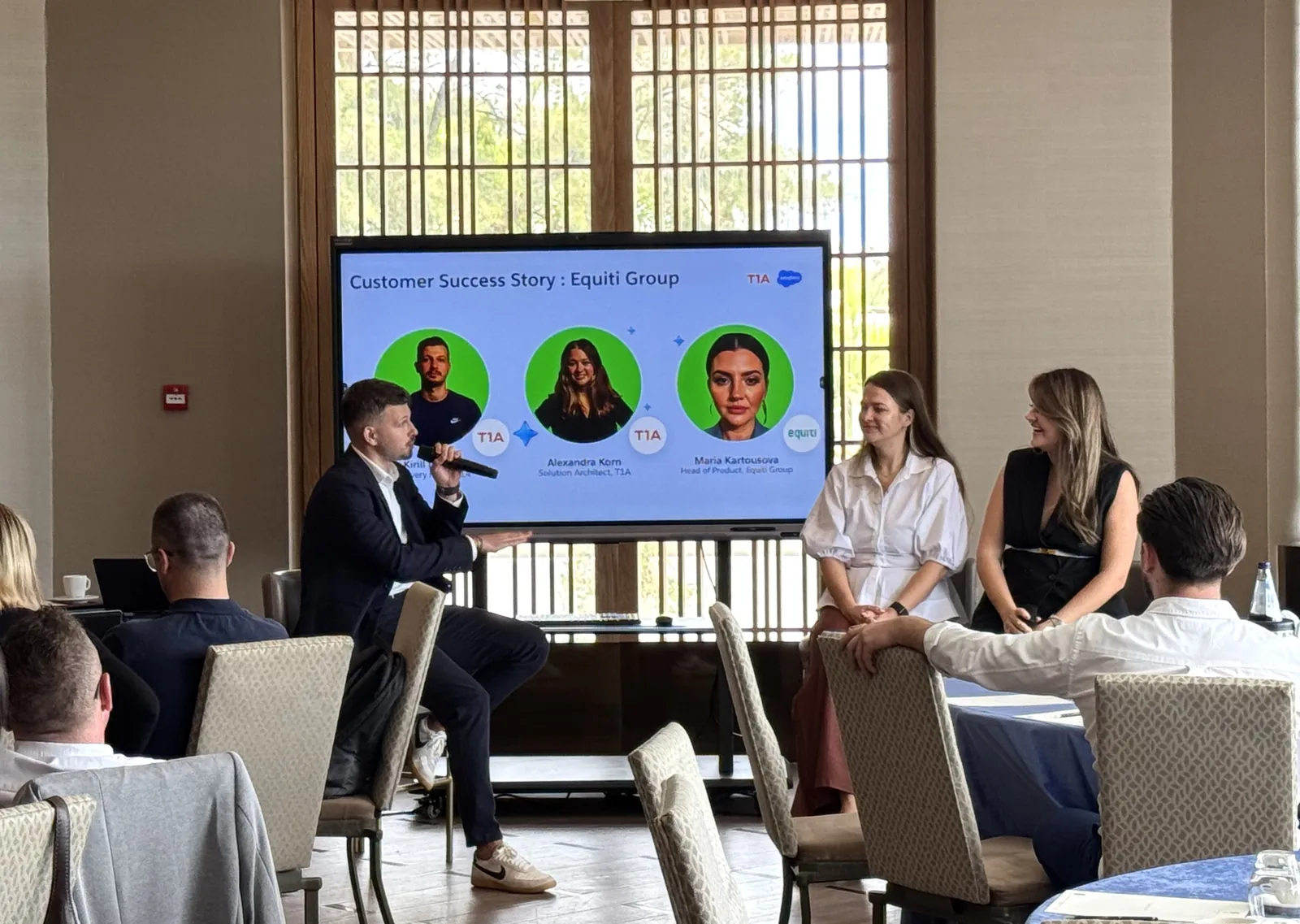
“The companies winning with AI are the ones investing in their data first, not necessarily the ones investing the most in AI”, – Alexandra Korn joined a firechat with Christos G. Bompolis (Salesforce) and spoke about a pattern many organizations face today: chasing the latest AI capabilities while overlooking the one thing that determines whether any of them will actually work – a holistic data layer. Without trusted, connected customer data even the smartest AI has very little to build on. “Companies are pouring significant budgets into AI capabilities while the data beneath those solutions remains fragmented across systems. Without a holistic customer view, intelligence has nothing reliable to reason on”, – she says.
Alex also polled the audience live: roughly 99% are using personal AI agents, about 80% are using AI at work, and that same 80% said their AI agents still need real improvement :) The reality behind that gap is usually rooted in undocumented processes and a lack of harmonized, clean data prepared for AI in the first place.
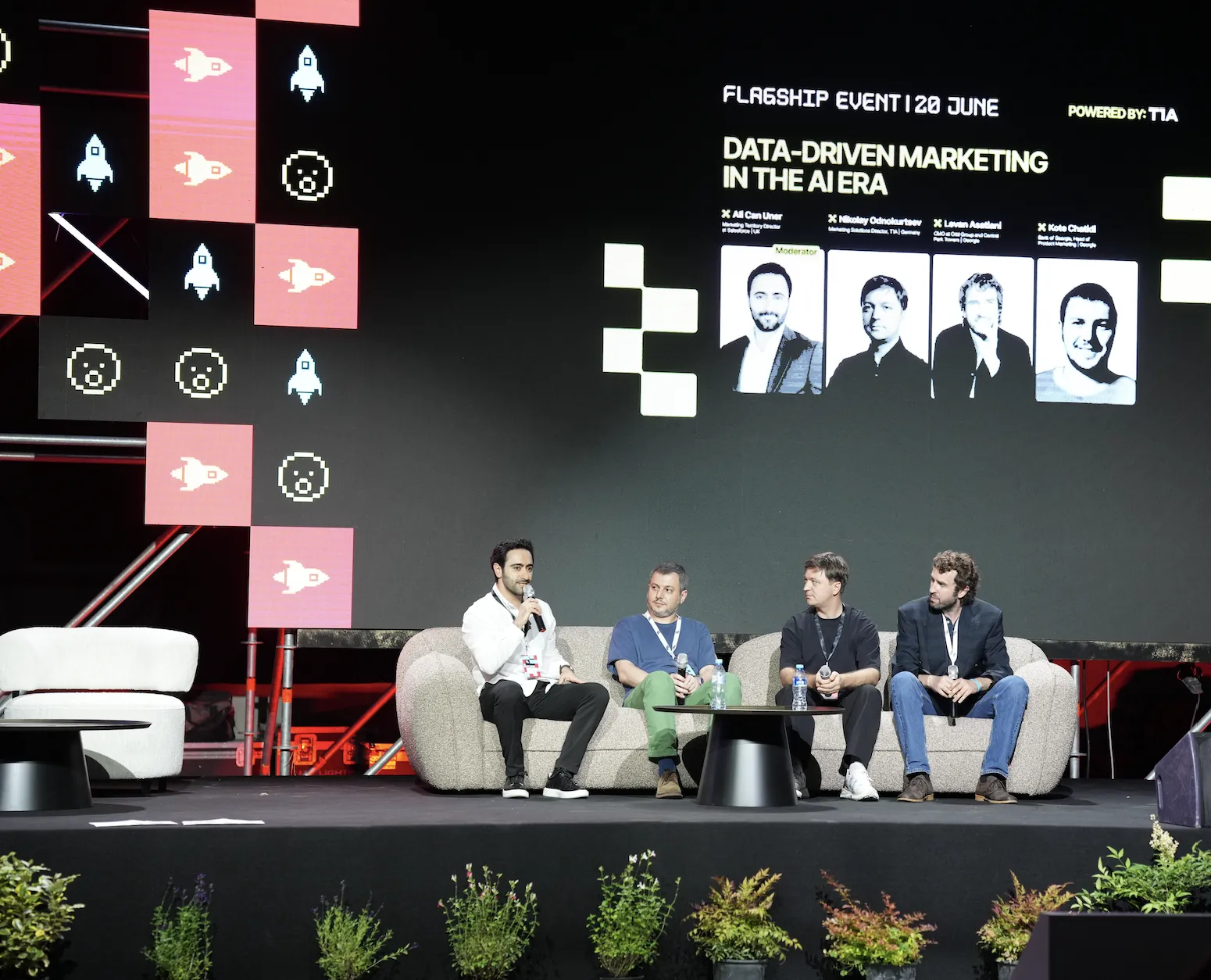
Nikolay Odnokurtsev joined a panel with Ali Can Uner (Salesforce), Levan Asatiani (Orbi Group) and Kote Chatidi (Bank of Georgia) and challenged another common expectation – that AI can compensate for years of disconnected data. In reality it does the opposite: it magnifies whatever foundation already exists. Clean, connected data makes better decisions, fragmented data becomes faster mistakes. Real transformation begins long before AI enters the picture – with unified customer profiles, data that can be trusted, and marketing systems able to react to customer behavior in real time, instead of following yesterday’s campaign calendar.
“AI application layer is changing faster than anyone can plan for, what looks modern and effective today may look outdated in a few years or even months — that layer can’t be future-proofed. The data foundation underneath it CAN, and needs to be built right now”, – Nikolay Odnokurtsev said. So the priority now (and the real competitive advantage!) may simply belong to the organizations that finally get their data foundations right. Thank you to everyone who challenged ideas and made this discussion so worthwhile.